Airports & Destinations
Navigating major aviation hubs and maritime ports requires more than just a valid passport and a ticket. Understanding the intricate logistics of terminal environments transforms a potentially overwhelming experience into a structured, predictable journey. Often, the sheer volume of crowds and the complexity of architectural layouts can spike your cortisol levels before a crucial business meeting or the start of a long-awaited family vacation. By mastering the fundamental principles of terminal navigation, passengers can reclaim control over their time and comfort.
This comprehensive resource explores the vital strategies needed to move seamlessly through arrivals halls, coordinate ground transportation, and execute flawless transfers to cruise departure points. From anticipating the exact walk times at major facilities to deciphering often-misleading signage, we will deconstruct the mechanics of efficient travel. Whether you are orchestrating a complex terminal transfer or managing luggage logistics for a group, these insights provide the clarity required for stress-free transit.
The Psychology and Logistics of Terminal Arrivals
Stepping off an aircraft marks the beginning of a highly choreographed logistical process. The transition from the controlled environment of an airplane cabin to the bustling reality of an arrivals hall requires mental preparation. The sheer density of modern airports naturally induces a heightened state of alertness, which can quickly turn into anxiety if not managed correctly.
Managing Post-Flight Stress
Arrival chaos is a well-documented phenomenon that affects both seasoned executives and occasional travelers. The sudden influx of sensory information—rapidly moving crowds, overlapping public announcements, and a maze of directional signs—can cause decision fatigue right when you need sharp focus. To mitigate this stress, it is crucial to formulate a clear exit strategy before disembarking. Knowing exactly where to look for your driver and understanding the layout of the terminal in advance drastically reduces the cognitive load.
Navigating Baggage Halls and Exit Routes
The baggage reclaim area is often the site of the most significant delays. A common error involves positioning oneself directly against the carousel belt, which severely limits mobility and blocks other passengers. Furthermore, following generic “Exit” signs without verifying your specific terminal wing can sometimes lead you astray, depositing you on the wrong level or far from your intended pick-up zone. To optimize your exit strategy, consider the following best practices:
- Stand at least two meters back from the baggage carousel to maintain a clear line of sight.
- Verify your ground transportation meeting point before passing through customs doors.
- Avoid repacking luggage in high-traffic choke points immediately after the customs boundary.
Mastering Major Airport Infrastructure
Every major aviation facility operates according to its own unique architectural logic. Familiarity with the specific quirks of a terminal can save substantial amounts of time, particularly when coordinating tight transfer windows or arranging professional chauffeur services.
Decoding Heathrow Terminals and Transfers
As one of the world’s busiest hubs, Heathrow presents unique navigational challenges, especially for international visitors facing its sprawling, multi-terminal layout. For instance, executing a transfer from Terminal 3 to Terminal 5 requires a precise understanding of the underground rail links and security checkpoints to complete the journey in under twenty minutes. Visitors frequently find themselves confused by overlapping signage that serves both domestic and international transfer routes simultaneously.
Efficient Exits at Gatwick, Manchester, and Stansted
Regional and secondary hub variations also demand specific strategies. At Gatwick’s North Terminal, understanding the precise layout of the arrivals concourse allows passengers to locate their pre-booked driver in under three minutes. Meanwhile, navigating Stansted involves calculating the surprisingly long physical walk from customs to the car park, a distance that catches many travelers off guard. Recognizing these facility-specific metrics is vital for accurate journey planning.
Optimizing Chauffeur and Taxi Meet-and-Greets
The handover point between air travel and ground transportation is where most logistical failures occur. A seamless meet-and-greet relies heavily on clear communication, precise timing, and a mutual understanding of terminal geography.
Communication Protocols and Connection Timing
Knowing precisely when to switch your mobile phone back on is the foundation of seamless coordination. Activating your device immediately upon touchdown allows a chauffeur to track your taxiing progress and adjust their approach. When establishing contact, the debate between utilizing a traditional signboard or a text message often depends on the facility. In highly congested areas like Manchester Airport, a quick SMS pinpointing a specific pillar number is frequently faster than scanning a sea of printed name boards.
Physical Meeting Points and Infrastructure Traps
Selecting the optimal waiting location requires strategic thinking. While a recognizable coffee shop provides seating, it can also act as a bottleneck, whereas a designated official meeting point might offer better visibility. Furthermore, architectural nuances can trap unwary travelers. A classic example is the lift versus escalator mistake: choosing the wrong vertical transport can deposit you on a sterile departure floor rather than the commercial arrivals level, forcing a time-consuming detour.
Seamless Transitions to Cruise Terminals
Transferring from an airport to a maritime port involves an entirely different set of logistical variables. The stakes are notably higher, as missing a ship’s departure time has severe consequences for your entire itinerary.
Port Navigation: Southampton, Dover, and Portsmouth
Guaranteeing your arrival before the gangway closes requires generous time management. For example, industry experts strongly recommend building a four-hour buffer for Heathrow to Southampton transfers to absorb potential traffic incidents on the M3 motorway. At Dover, drivers frequently encounter terminal gate mistakes, routing passengers to freight entrances instead of passenger drop-offs. At Portsmouth International Port, clarifying exactly where your chauffeur will wait is essential, as the designated zones differ significantly from aviation standards.
Luggage Handover and Fleet Selection
The “curbsidetocabin” transition is a crucial phase of maritime travel. Proper tagging and a clear handover protocol ensure that heavy trunks are seamlessly transferred to the ship’s porters without passenger strain. For groups, fleet selection becomes paramount. When organizing a family reunion cruise, evaluating the benefits of a single spacious minibus versus multiple executive cars impacts both cost and luggage capacity. Consider these factors when booking:
- Total volume of oversized cruise luggage versus standard cabin bags.
- The physical mobility requirements of elderly family members.
- The necessity for unified arrival times at the port check-in desks.
Post-Cruise Disembarkation Strategies
Returning from a voyage presents the final hurdle. Disembarkation is notorious for simultaneous mass exits, leading to intense congestion on the dockside and significant strain on local transport networks.
Locating Drivers in Congested Port Areas
Upon disembarkation, passengers are frequently confronted with misleading “PickUpZone” signs that guide them into crowded, slow-moving taxi queues rather than private hire bays. Furthermore, busy piers often suffer from “WhiteVan” confusion, where hundreds of identical shuttle vehicles create visual chaos. In areas with notoriously poor cellular signal, agreeing on a highly specific, static landmark beforehand is far more reliable than relying on real-time phone calls.
Managing Customs Delays and Late Dockings
Maritime schedules are highly susceptible to weather and tidal variations. If a ship is docking late, it profoundly affects your driver’s waiting time and parking tariffs. Additionally, the reality of border control delays upon return must dictate when you schedule your pickup. Building flexibility into your ground transport booking ensures that you are not penalized for logistical hold-ups entirely beyond your control. To successfully bypass the post-cruise traffic jam, adopt a structured exit plan:
- Monitor the ship’s actual docking time via maritime tracking apps while enjoying breakfast.
- Disembark only when your driver confirms they have secured a spot in the designated holding area.
- Proceed directly to the pre-agreed pillar or bay, ignoring generic taxi rank signage.
Ultimately, mastering the art of airport and destination transfers relies on foresight, clear communication, and an understanding of terminal mechanics. By applying these strategic principles, travelers can transform the most demanding legs of their journey into a smooth, highly orchestrated experience, ensuring they arrive at their final destination relaxed and ready.

Where Exactly Will Your Chauffeur Wait at Portsmouth International Port?
The key to a seamless pickup at Portsmouth Port is not looking for signs, but understanding the port’s operational geography and having a pre-agreed communication protocol with your driver. Generic “Pick Up Zone” signs are for the public taxi queue,…
Read more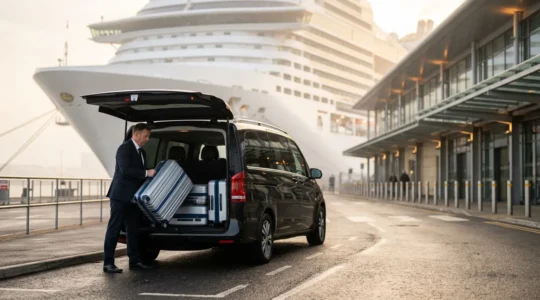
How to Guarantee Your Arrival at Southampton Docks Before the Gangway Closes?
The fear of motorway traffic causing you to miss your cruise ship is a valid concern, but it’s entirely preventable. The solution isn’t to simply ‘leave early,’ but to treat your transfer as a precise logistical operation. By building a…
Read more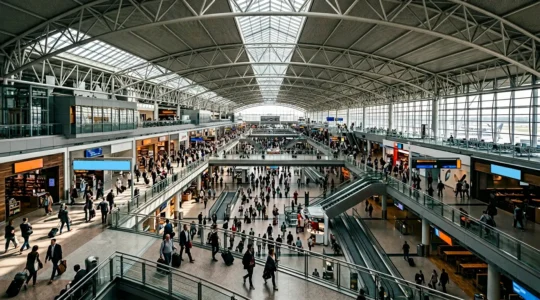
Which Heathrow Terminal Is the Most Confusing for International Visitors?
The most confusing Heathrow terminal isn’t a specific number, but a series of predictable ‘wayfinding traps’ that exist across the entire airport system. Official ‘Exit’ signs can be ambiguous, directing you to connections or baggage claim instead of the true…
Read more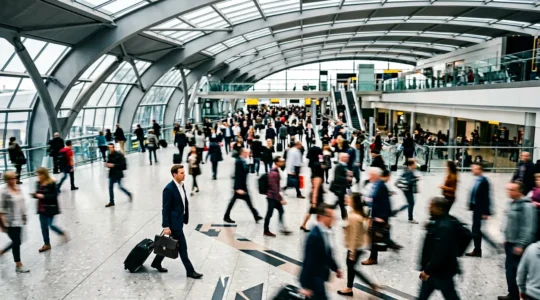
How to Navigate Heathrow Arrivals Without Losing 45 Minutes in Crowds?
A seamless airport exit isn’t about luck; it’s a science of coordination and bypassing flawed systems. Arrival chaos is often a designed feature to increase retail “dwell time,” and it physiologically impacts you by raising cortisol levels. Mastering a communication…
Read more