Blog
Executing a flawless day of business meetings requires more than just knowing the addresses on your calendar. Ground transportation is the invisible infrastructure that holds a high-stakes itinerary together. When business schedules shift hourly, managing logistics becomes a complex, dynamic puzzle where a single miscalculation can jeopardize critical opportunities.
Think of corporate transport as a finely tuned orchestra. Every pickup, drop-off, and waiting period must be synchronized with precision. However, the reality of executive travel is rarely predictable. Meetings run late, urban traffic patterns fluctuate unexpectedly, and last-minute location changes are the norm. Understanding how to navigate these variables is essential for maintaining productivity and reducing travel-related stress.
This comprehensive resource explores the strategic principles of managing executive ground transportation. From building resilient itineraries to selecting the right service models and navigating high-density business districts, we will detail how to transform unpredictable travel logistics into a seamless, efficient experience.
Mastering Volatile Business Itineraries
The most significant challenge in corporate travel is unpredictability. A schedule that looks perfectly optimized on paper can quickly unravel when faced with real-world variables. Mastering this volatility requires moving away from rigid planning toward dynamic logistics management.
The Domino Effect of a Late Meeting
Why does one delayed conversation disrupt an entire day of transport? The answer lies in the cascading nature of logistics. If a morning presentation runs twenty minutes over, it does not just delay the immediate departure; it pushes the vehicle into a different traffic window, potentially compounding the delay for every subsequent stop. Chauffeurs operate on strict geographical positioning, and missing a pre-planned departure window often means fighting through heavier congestion or missing optimal routing opportunities.
Building Buffer Time Into Your Schedule
To prevent this domino effect, creating “slack”—or strategic buffer time—within your itinerary is non-negotiable. Slack absorbs the shock of unexpected delays without forcing you to cancel or reschedule subsequent commitments.
Follow this systematic process to effectively integrate buffer time into a corporate schedule:
- Analyze historical meeting durations: Identify which clients or stakeholders historically run over time and allocate an extra fifteen minutes to those specific blocks.
- Account for micro-transitions: Calculate the time required to exit a high-rise building, clear security, and locate the waiting vehicle, rather than just the drive time.
- Assess traffic volatility: Add a twenty percent time margin to journeys occurring during peak commuting hours or taking place in historically congested corridors.
- Implement strategic breaks: Schedule a flexible thirty-minute block in the early afternoon that can serve as a catch-up period if morning meetings overrun, or as preparation time if you are running on schedule.
Selecting the Optimal Transport Strategy
Not all transportation models are suited for the shifting sands of an executive schedule. Choosing the correct booking structure is crucial for balancing flexibility, efficiency, and cost.
Hourly Charter vs. Point-to-Point Booking
When schedules are volatile, deciding between an hourly charter (where the vehicle stays with you constantly) and point-to-point transfers (booking individual rides for each leg) is a fundamental strategic choice. Each model serves a distinct operational purpose.
- Hourly Charter: Offers maximum flexibility. The vehicle acts as a mobile office and is immediately available if a meeting ends early or runs late. This is the optimal choice when your agenda shifts hourly or involves multiple stops within a confined geographic area.
- Point-to-Point: Highly cost-effective for static schedules with clearly defined start and end times. However, it penalizes unpredictability, as missing a scheduled pickup often incurs wait-time fees or requires booking a completely new vehicle.
Wait and Return or Drop and Pick Up?
In densely packed commercial neighborhoods, such as Soho or dense financial districts, the choice between keeping a car waiting versus scheduling a later pickup requires careful consideration. Keeping a vehicle on Wait and Return guarantees immediate departure but incurs continuous billing and potential parking challenges. Conversely, Drop and Pick Up saves hourly costs but risks delays if the chauffeur cannot immediately re-enter the narrow, congested streets when you are ready to leave. For highly critical, time-sensitive meetings in tight urban grids, retaining the vehicle is generally the safer investment.
Navigating High-Density Business Districts
Executing a multi-stop meeting schedule in a major central business district is an advanced logistical challenge. The geography, local regulations, and traffic density of the city dictate how an itinerary should be structured.
Routing Strategies for Central Locations
Planning a 5-stop meeting schedule in central hubs requires sequential geographical routing. A common mistake is scheduling meetings based purely on availability rather than location. For example, scheduling a meeting in a historic, narrow-street district like Mayfair immediately after one in a dense financial zone like The City creates a severe traffic nightmare. The cross-town journey during peak commercial hours can easily consume your entire buffer time.
To optimize central routes, always cluster morning meetings in one specific neighborhood and smoothly transition to adjacent districts in the afternoon, avoiding backtracking across major traffic arteries.
The Hidden Costs of Urban Congestion
Major global cities frequently employ congestion pricing to manage traffic flow. Navigating these zones without a clear strategy leads to the congestion charge mistake, adding significant hidden costs to your final transportation bill. If a point-to-point vehicle exits and re-enters a toll zone multiple times throughout the day, cumulative charges can exceed the cost of simply keeping an hourly vehicle stationed within the zone boundaries.
When Walking Becomes the Fastest Option
Despite the comfort of a private vehicle, there are moments when abandoning the car is the most efficient choice. Recognizing the traffic signals that mean “walk” is a crucial skill for any executive.
- Gridlocked one-way systems: When your destination is physically close but requires a lengthy detour through one-way streets due to roadworks or accidents.
- Pedestrian-heavy zones: Areas where vehicular movement drops below average walking speed.
- Complex boardroom entrances: When minimizing walking time from the car to the actual boardroom entrance requires being dropped at a strategic rear entrance rather than waiting in traffic to access the main plaza.
Avoiding Hidden Fees and Policy Traps
Beyond the physical movement of vehicles, understanding the financial and administrative aspects of transport logistics prevents unnecessary budget drain. Flexibility often comes with financial caveats.
Understanding Cancellation and Modification Terms
One of the most frequent financial pitfalls in corporate logistics is the cancellation policy trap, which routinely wastes a significant portion of a travel budget. Transportation providers enforce strict windows for altering reservations. Failing to update a pickup location in real-time or attempting to push back a start time an hour before departure frequently triggers full-charge penalties.
To update logistics without penalties, mandate that your administrative team utilizes centralized booking platforms that offer real-time chauffeur communication and extended modification windows. Negotiating corporate accounts that feature flexible cancellation terms—even if the base rate is slightly higher—ultimately saves money when dealing with the inevitable volatility of executive business travel.
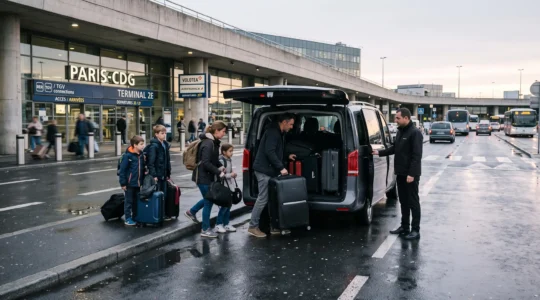
How to choose the best minibus hire branch in Paris-Nord for family and corporate trips
Organising a group transfer around Roissy Charles-de-Gaulle rarely comes down to price alone. Whether you are picking up relatives after a long-haul flight or shuttling clients between the airport and a business meeting, the real question is which minibus hire…
Read more
The Best Cycling Experiences to Enjoy on Île de Ré
Direct answer: The best cycling experiences on the Île de Ré are the ones you can finish comfortably in your available time—typically a half-day family loop near La Flotte, a scenic salt-marsh ride toward Ars-en-Ré, or a longer lighthouse-and-coast day…
Read more
Why £5 Million Liability Cover Is Non-Negotiable for Corporate Contracts
A vendor’s inadequate insurance is not their problem; it is a direct and quantifiable financial liability for your company. Standard vehicle insurance is void for commercial activity, creating a critical coverage gap that exposes your firm to the entire cost…
Read more
The Executive Playbook: How to Execute a 5-Stop London Meeting Schedule Without Delays
Executing a flawless multi-stop meeting day in London isn’t about luck or faster cars; it’s about applying a rigorous logistics protocol. Strategic sequencing and mode-switching (Transit Arbitrage) can cut journey times by up to 50% in peak traffic. Micro-planning drop-off…
Read more
Mastering London’s Chaos: How to Manage Transport Logistics When Your Roadshow Schedule Shifts Hourly
Managing hourly schedule changes for a London roadshow isn’t about better luck with traffic; it’s about implementing a system of structured flexibility. Shifting from reactive point-to-point bookings to a proactive hourly charter model drastically reduces in-the-moment decision fatigue. Building pre-calculated…
Read more