Travelers & Uses
The landscape of premium transportation extends far beyond simply moving a passenger from one location to another. True bespoke travel requires a profound understanding of the specific context surrounding each journey. Whether facilitating a flawless multi-vehicle convoy for a corporate congress, ensuring a seamless terminal-to-car exit for a high-profile executive, or providing a serene environment for a family traveling with a newborn, the requirements vary drastically based on the traveler and the use case.
Mastering these logistics demands meticulous planning, proactive problem-solving, and a deep appreciation for the nuances of different travel scenarios. From mitigating the risks of visual hacking during a commute to coordinating “wheelsdown” notifications with aviation authorities, every detail matters. This comprehensive resource breaks down the distinct categories of travelers and their unique transportation needs, providing the fundamental principles required to execute flawless journeys across any context.
Executive Productivity and Corporate Travel
For business leaders and high-net-worth individuals, time is the ultimate luxury. The primary objective of corporate transport is converting unproductive transit periods into highly efficient, billable hours. Achieving this requires a vehicle environment that rivals a corner office in terms of connectivity, privacy, and comfort.
Maximizing Billable Hours on the Move
Working effectively from the back seat of a moving vehicle presents unique physical and technical challenges. Simply opening a laptop is rarely enough. A premium service anticipates these hurdles to foster a seamless workflow.
- Reliable Connectivity: Tethering a 5G connection reliably on major routes, such as the M4 motorway, requires advanced in-car cellular routers rather than relying solely on mobile hotspots, which frequently drop in rural pockets.
- Ergonomics and Health: Positioning a laptop for a Zoom call necessitates the right seat angle and stabilization to project a professional image. Furthermore, improper use of reading lights versus ambient light during evening work is a leading cause of motion sickness when analyzing complex spreadsheets.
- Information Security: Working in heavy traffic exposes executives to visual hacking—where adjacent drivers or pedestrians can view sensitive legal documents or screens. Tinted privacy glass and strategic screen positioning are non-negotiable.
Intercity Transfers: Private Car vs. Train
When planning intercity business trips, such as traveling from London to Manchester or Edinburgh, the debate between utilizing first-class rail tickets and booking a long-distance chauffeur is constant. While trains advertise speed, the reality of intercity travel often involves complex station transfers and unexpected delays.
Opting for a private vehicle over the train becomes the superior choice in several specific scenarios. Station transfers can add significant “deadtime” to a journey. Bypassing the station entirely can often save up to 45 minutes on a standard intercity trip. Furthermore, public trains pose a severe risk to privacy; conducting confidential negotiations over the phone is virtually impossible in a shared carriage, regardless of the class booked. Finally, when evaluating cost per mile versus cost per seat, a chauffeur-driven vehicle often becomes the more financially sound option when transporting three or more executives together.
Seamless Airport and Station Connections
Transit hubs are inherently chaotic environments characterized by rigid schedules, complex layouts, and high foot traffic. The role of a high-end transport service is to insulate the traveler from this friction, orchestrating arrivals and departures with military precision.
Mastering Airport Logistics for VIPs
Guaranteeing a seamless terminal exit for high-profile clients requires synchronizing multiple moving parts. A miscalculation here can easily add 30 minutes to a journey, causing frustration and delaying subsequent engagements.
- Flight Tracking: Utilizing advanced aviation software to monitor “wheelsdown” notifications ensures the driver is perfectly positioned long before the aircraft reaches the gate.
- Customs and Luggage Coordination: Understanding the nuances of fast-track security—which occasionally takes longer than standard lanes due to understaffing—and anticipating luggage belt errors are critical steps in calculating exact exit times.
- The Exit Strategy: For high-profile clients, choosing between the main exit and a dedicated VIP gateway is a matter of security and discretion. The driver must establish clear visual or digital signals to start the engine moments before the client steps through the doors, ensuring zero waiting time at the curb.
Navigating Major Rail Hubs
Major international rail stations, such as St Pancras International or Euston, present logistical hurdles that rival major airports. Navigating these spaces requires deep localized knowledge.
For Eurostar arrivals, calculating the exact time from customs clearance to the car seat is essential. Relying on standard “meetingpoints” is often a mistake, as these areas become bottlenecked during peak arrivals. Instead, drivers must utilize specific, less congested rendezvous zones. Furthermore, a professional service must adapt instantly to sudden platform changes—a notorious occurrence at stations like Euston—ensuring the chauffeur intercepts the client smoothly, regardless of last-minute diversions.
Luxury Hotel Arrivals and Departures
The transition between the vehicle and the hotel lobby sets the tone for the entire stay. Surprisingly, a significant percentage of VIP arrivals face friction right at the hotel driveway due to poor communication between the transport provider and the hospitality staff.
Coordinating an arrival at a prestigious property requires preemptive communication. A common information mistake is failing to brief the doorman and the concierge regarding the exact arrival time and luggage volume. To guarantee a seamless check-in, the chauffeur must coordinate the transfer of baggage so that the suitcases reach the suite before the guest even completes the registration process. Conversely, for departures, the implementation of a strict “10-minutewarning” rule ensures the vehicle is staged, climate-controlled, and ready to depart the moment the client exits the lobby, avoiding stressful waits in “nostopping” zones.
Specialized Luggage and Equipment Handling
Transporting anything beyond standard cabin baggage requires careful vehicle selection and spatial planning. Mishandling specialized equipment not only risks damaging expensive items but can also compromise passenger safety and comfort.
Choosing the correct vehicle configuration is paramount. For example, a standard luxury saloon will not accommodate a cello case or three large hard-shell suitcases without encroaching on passenger space; an estate vehicle or a premium MPV is required. Similarly, transporting ski gear from urban centers to private airfields necessitates specialized roof boxes or integrated ski hatches. Drivers must also be trained in handling luxury leather luggage, as a simple lifting mistake against a sharp trunk edge can cause severe damage. When a client is traveling solo with heavy, 40kg bags, professional porter services must be integrated into the booking to mitigate health risks and ensure a graceful transit.
Family Travel and Infant Comfort
Traveling with infants and toddlers shifts the primary focus from productivity to environmental control, safety, and sensory management. A successful family transfer prevents meltdowns by maintaining strict routines even while on the road.
When traveling from major airports with a newborn, temperature control is critical for sleeping infants, requiring precise dual-zone climate management. Scheduling the transfer to align perfectly with the child’s natural nap window is often the difference between a peaceful ride and a stressful ordeal. Professional family chauffeurs also operate under an “emergencystop” protocol, proactively identifying clean, safe service stations along the route where parents can feed or change their child without feeling rushed. Furthermore, ensuring the vehicle interior is impeccably sanitized provides peace of mind for parents of crawling babies.
Managing Logistics for Events and Weddings
Event transportation is a high-stakes endeavor where delays have a cascading effect on hundreds of people. Whether it is a corporate congress or a country wedding, managing large-scale movements requires flawless route planning and vehicle segregation.
Flawless Wedding Day Transport
Timing a bride’s arrival to the exact minute requires the driver to physically drive the route a week prior, noting roadworks, school run traffic, and potential bottlenecks. Vehicle selection must also account for attire; entering and exiting a low-slung vintage sports car in a voluminous ballgown requires specific techniques and ample space. Furthermore, the chauffeur must be equipped for unpredictable weather, carrying oversized umbrellas and essential amenities like premium tissues and hydration to keep the bridal party comfortable.
Coordinating Large Groups and Congresses
Moving dozens of delegates to major venues requires a strategic approach to capacity and flow. Planners must decide between running a continuous loop service or an on-demand model based on the flexibility of the congress schedule.
- Vehicle Allocation: Determining whether to utilize one large coach or three premium MPVs depends on the venue’s access restrictions and the desired level of VIP treatment.
- Guest Segregation: Segregating keynote speakers from general delegates must be handled discreetly, ensuring speakers arrive fresh and relaxed without causing offense to other attendees.
- Managing the Surge: The “keynotefinish” creates a massive exit surge. Preventing guests from being stranded requires precise headcount protocols and staggered vehicle staging to avoid driveway gridlock.
Ultimately, the mastery of transport logistics lies in anticipating the unique demands of every traveler category. By tailoring the environment, the vehicle, and the schedule to the specific use case, transport providers elevate a simple journey into a strategic, comfortable, and flawlessly executed experience.
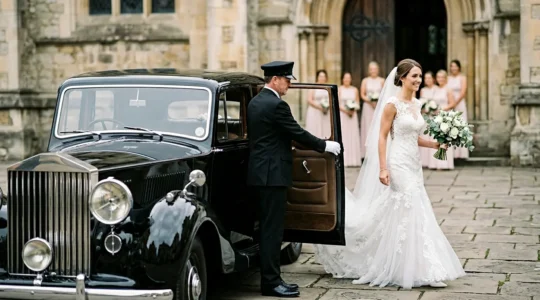
How to Time the Bride’s Arrival Perfectly to the Minute?
Contrary to popular belief, a bride’s perfect arrival isn’t about luck or just ‘leaving on time’; it’s a meticulously planned operation designed to eliminate every variable. Success depends on proactive risk management, from route reconnaissance to contingency plans for weather…
Read more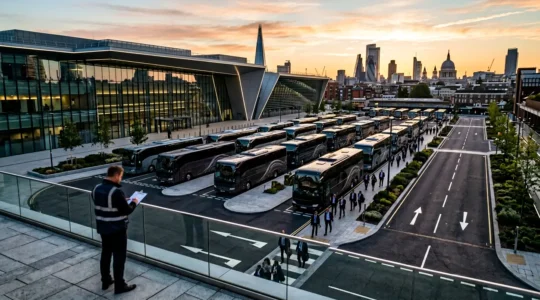
How to Manage Transport for 50 Delegates at ExCeL London?
Successfully managing delegate transport is not about booking coaches; it’s about designing a frictionless, cost-controlled mobility system that enhances the event experience. Master cost control by blending “per hour” models for core movements with “per seat” options for flexibility, avoiding…
Read more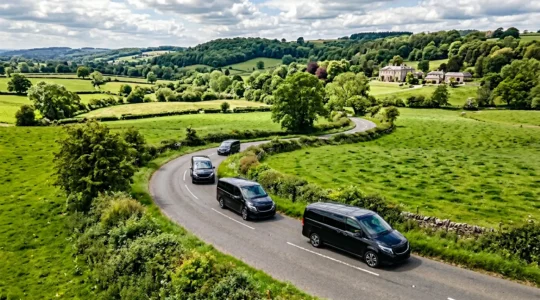
How to Move 20 Guests to a Country Wedding Without Losing a Single One
Transporting wedding guests is not a service; it’s a mission-critical operation where success is measured by zero failures. Risk is managed through calculated redundancy (multiple vehicles vs. a single coach) and pre-emptive route reconnaissance. Control is maintained via a “Single…
Read more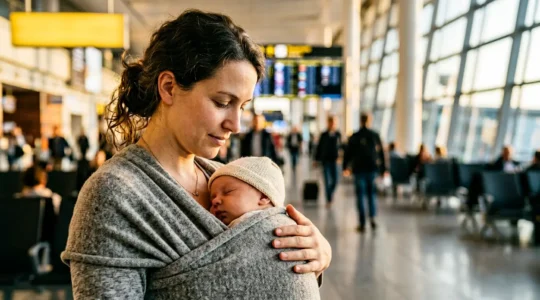
How to Travel from Gatwick with a Newborn Without a Meltdown?
The secret to a peaceful journey from Gatwick with a newborn isn’t packing more, but outsourcing stress by choosing a transport service that creates a “bubble of calm.” Prioritise services that guarantee pre-installed, correctly fitted car seats and allow for…
Read more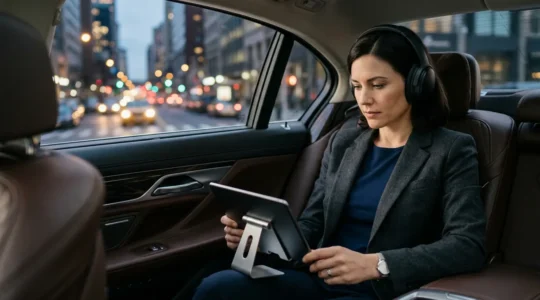
How to Convert “Dead Time” in Traffic into Billable Hours?
For high-earning consultants, every minute spent in transit is a direct loss of revenue. The generic advice to “check emails” is a low-value distraction. The real solution lies in systematically engineering your travel environment into a “Deep Work Cocoon”—a high-focus,…
Read more
London to Edinburgh by Car: Is the 7-Hour Drive Worth the Comfort?
Contrary to popular belief, the value of a chauffeur drive from London to Edinburgh isn’t just avoiding hassle; it’s about transforming 7 hours of travel time into a strategic asset for productivity and well-being. The journey becomes a ‘personal bubble’…
Read more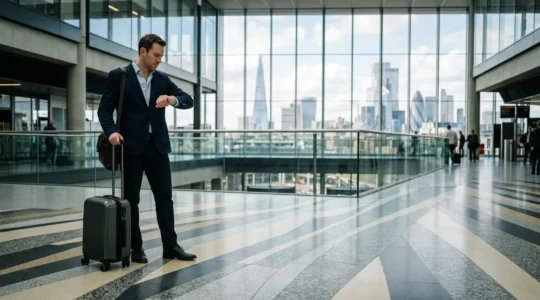
What Is the Minimum Connection Time Between Heathrow and Kings Cross?
Relying on a standard 90-minute travel estimate between Heathrow and King’s Cross is a critical planning failure; the true connection time is a dynamic calculation based on mitigating logistical risks. Traffic, station congestion, and rail delays are not exceptions but…
Read more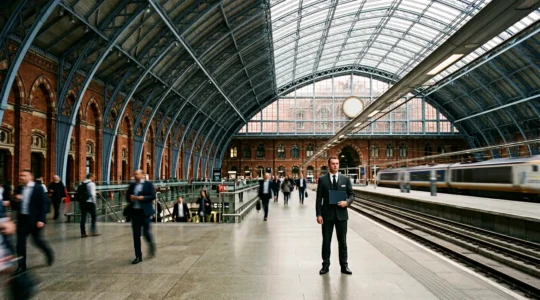
Your Guide to Finding a Chauffeur at St Pancras International After the Eurostar
The secret to a swift exit from St Pancras is not following the crowd, but using the same system as professional drivers. The official “Meeting Point” is often a congested chokepoint; seasoned travellers use quieter, specific landmarks. A professional chauffeur…
Read more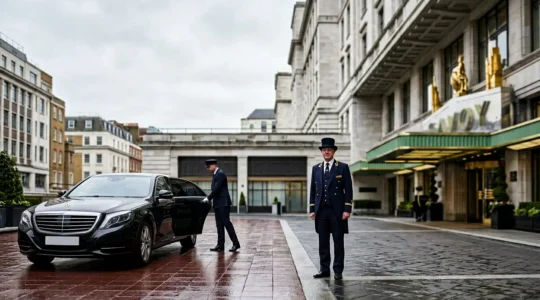
How to Coordinate Your Arrival at The Savoy for a Seamless Check-In
The difference between a standard arrival and a truly seamless VIP welcome lies not in requests, but in meticulously synchronized operational protocols between your transport and the hotel. Failures often stem from information gaps and process mismatches, not a lack…
Read more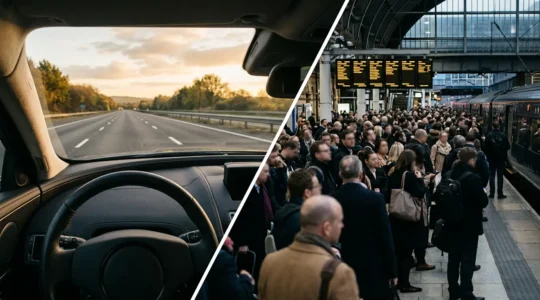
Car vs. Train: Which Is More Reliable for London to Manchester Business Trips?
A private chauffeur service becomes more cost-effective than the train when the value of guaranteed arrival and productive work time outweighs the ticket price. UK rail journeys face significant reliability issues, and hidden ‘time costs’ at stations for transfers and…
Read more