Drivers & Services
When orchestrating high-level corporate travel, the journey is rarely just about moving passengers from point A to point B. It is a critical extension of a firm’s professional image, where every minute counts and privacy is paramount. In the realm of premium transport, understanding the intricacies of Drivers & Services transforms a simple commute into a strategic business advantage.
Whether you are managing an intensive IPO roadshow across the financial district or coordinating a sensitive airport transfer for a key stakeholder, the difference between a successful trip and a logistical failure often lies in the invisible details. From navigating complex urban grids to executing flawless VIP meet-and-greets, mastering executive transport requires far more than simply booking a vehicle.
This comprehensive overview explores the essential pillars of professional chauffeur services. By demystifying the operational protocols used by elite transport providers, this guide provides actionable insights to ensure seamless, secure, and highly efficient corporate travel.
The High Stakes of Corporate Transport and Reputation
In the corporate world, transport logistics are inherently tied to reputation and revenue. A seemingly minor delay is never just an inconvenience; it is a cascade of missed opportunities. Arriving just ten minutes late to a crucial pitch can project unreliability, potentially costing a firm thousands in lost reputation or blown deals. Consequently, securing dependable transport is an investment in brand integrity.
Many travel coordinators fall into the “cheapluxury” trap. This occurs when a booking appears premium on the surface but is built on a fragile operational model. Discounted executive cars often rely on tight, back-to-back scheduling. If an earlier job overruns, your vehicle simply does not arrive on time. Furthermore, these attractive base rates frequently obscure hidden surcharges, such as exorbitant waiting time fees or last-minute toll additions.
To secure absolute reliability, corporate clients must observe the 24-hour rule: booking a ride at least a full day in advance guarantees that the provider can allocate a dedicated vehicle and driver, rather than relying on the closest available car in a reactive dispatch queue. This proactive approach ensures that the vehicle is polished, prepped, and waiting long before the passenger even steps out of their door.
Mastering Airport Transfers and Real-Time Flight Tracking
Airport transfers are the most volatile segment of corporate transport. Between unpredictable holding patterns, tailwinds, and luggage delays, exact timings are a moving target. Navigating this volatility separates standard taxi services from premium chauffeur operations.
The Pitfalls of Standard Dispatch vs. Independent Tracking
Standard taxi dispatchers frequently miss critical flight delay updates because they rely on broad, scheduled arrival times or delayed airline apps. If a flight from New York catches a strong tailwind and lands 45 minutes early at Heathrow, a driver relying on static schedules will still be miles away, leaving a tired executive stranded at arrivals.
Elite drivers counteract this by utilising independent, real-time tracking systems like FlightRadar24. This allows them to monitor the actual aircraft in the sky rather than relying on the airline’s passenger-facing app, which can lag. Furthermore, passengers must be meticulous when providing details: a simple flight number mistake is the leading cause of “noshow” charges, as the driver will be tracking the wrong aircraft entirely.
The Art of the VIP Airport Welcome
The first thirty seconds of an airport pickup set the tone for the entire trip. After a long-haul flight, a tired traveller does not want forced conversation; they want seamless relief. The welcome protocol must be calibrated to the passenger’s specific needs and cultural background.
- Location Strategy: Decide between an in-terminal meet-and-greet or a curbside call. In-terminal is essential for first-time visitors or VIPs requiring luggage assistance, while curbside is vastly preferred by frequent flyers who want to exit the airport environment immediately.
- Signboard Visibility: For non-English speaking clients or crowded arrival halls, a signboard is crucial. It must be formatted with maximum contrast, using clear block lettering, and omitting titles that might confuse the scan of a tired eye.
- Cultural Etiquette: A handshake is not always appropriate. Depending on cultural norms or the sheer fatigue of the passenger, a respectful nod, a clear introduction, and immediate assistance with luggage is often the most appreciated gesture.
- Identity Verification: To avoid the “wrongpassenger” mistake—a common occurrence when dealing with prevalent surnames—drivers must discretely verify the destination or the booking company before taking the luggage.
Conquering Urban Traffic and Complex Routing Strategies
Navigating major urban centres requires a blend of technological aid and deep-rooted local expertise. The goal is not just to find the shortest route, but the most fluid one, avoiding the notorious gridlocks that plague city arteries during rush hours.
GPS Technology vs. Driver Local Knowledge
While modern GPS applications like Waze are invaluable for spotting real-time accidents, they are not infallible. A common trap in central business districts involves micro road closures or temporary building works that algorithms fail to register immediately. Relying solely on a screen can lead a vehicle straight into a dead-end.
This is where local knowledge—often referred to as “TheKnowledge” in London—becomes indispensable. An expert chauffeur knows exactly why the A4 is perennially gridlocked on Monday mornings and how to bypass the M25 car park during the Friday evening rush. By combining real-time data with historical traffic patterns, expert drivers can save significant time on cross-city journeys. A fundamental rule of efficiency in central grids is avoiding heavily pedestrianised shopping districts, like Oxford Street, at all costs.
Strategic Drop-Offs and Lane Regulations
The final mile is often the slowest. In complex one-way systems, insisting on a doorstep drop-off can sometimes add fifteen minutes to a journey if it requires looping around a vast block. A strategic corner drop-off, positioned safely just fifty yards from the entrance, is frequently the faster and more efficient choice.
Furthermore, understanding municipal vehicle regulations is key to route planning. It is vital to know which vehicles are legally permitted to use bus lanes. In many cities, purpose-built hackney carriages (Black Cabs) have full access to fast-track transit lanes, whereas standard Private Hire Cars do not. This regulatory nuance can dictate the type of vehicle you book for time-sensitive, cross-city dashes.
Orchestrating High-Level Corporate Roadshows
A corporate roadshow—such as an IPO presentation tour—is a gruelling marathon of back-to-back meetings. Executing this with zero transport failures requires military-level precision, where the vehicle acts as a mobile command centre.
Vehicle Selection and Acoustic Privacy
Choosing the right vehicle is not just about passenger capacity; it is about the environment it creates. For executive teams of five or more, a luxury minicoach is vastly superior to a standard minibus, offering the necessary comfort to review pitch decks between stops.
Privacy is another critical factor. When deal-sensitive discussions occur in the back seat, acoustic isolation is mandatory. Clients must weigh the benefits of an Executive Saloon, which offers a smooth, luxurious ride, against a Black Cab, which provides a physical glass partition separating the passengers from the driver, guaranteeing absolute conversational privacy for sensitive calls.
Anticipating the Unexpected in Roadshow Logistics
Even the most meticulously planned itinerary will face disruptions. Meetings routinely overrun, and standard operating procedures must account for this.
- The Meeting Overrun Protocol: Drivers must be pre-authorised to alter subsequent route plans dynamically, notifying the principal’s assistant rather than interrupting the passenger.
- Convoy Management: Keeping three or more cars together in heavy city traffic is a genuine art form. It requires dedicated communication channels between drivers and a lead car that paces the convoy to prevent separation at traffic lights.
- Architectural Knowledge: Drivers must know the side entrances and discreet loading bays of major city banks and corporate headquarters to facilitate swift, paparazzi-free, or simply efficient board-level access.
- In-Car Amenities: The roadshow vehicle must be stocked with specific essentials: neutral-tasting snacks, bottled water, phone chargers for all device types, and spare stationery. These small details keep the executive team focused and energised.
Ultimately, premium executive transport is an exercise in risk mitigation and environmental control. By understanding the intricacies of flight tracking, urban routing, and bespoke VIP protocols, corporate travel managers can shift their perspective from simply booking cars to strategically managing their most valuable asset: their team’s time and peace of mind. Investing in expert Drivers & Services guarantees that no matter how chaotic the city outside, the environment inside the vehicle remains a sanctuary of productivity and calm.
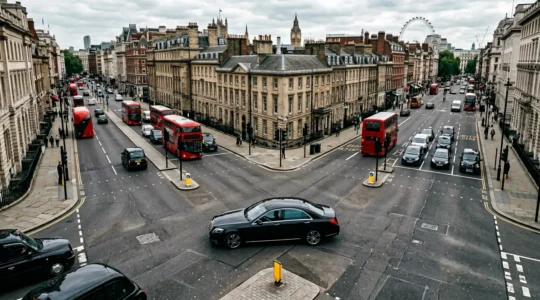
How Do Expert Chauffeurs Save 15 Minutes crossing Central London?
Saving time in London isn’t about having a better sat-nav; it’s about exploiting the predictable gaps and patterns the algorithms miss. Elite drivers use “traffic delta” knowledge—the gap between GPS data and ground reality—to beat estimates on seemingly congested routes….
Read more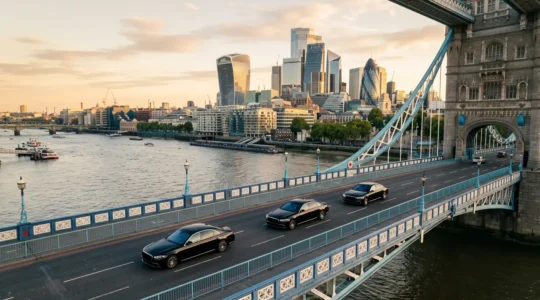
How to Execute an IPO Roadshow with Zero Transport Failures?
Executing a flawless IPO roadshow in London isn’t about luxury; it’s about eliminating every single point of logistical failure through military-grade precision. Coordination of multiple vehicles is a tactical operation, where a single delay creates a cascade effect that jeopardises…
Read more
How Expert Drivers Avoid the M25 Car Park During Friday Rush Hour?
Beating London traffic isn’t about finding a secret empty road; it’s a science of strategic synthesis that professional drivers master to stay ahead. Expert drivers combine real-time data from apps like Waze with deep, historical knowledge of traffic patterns and…
Read more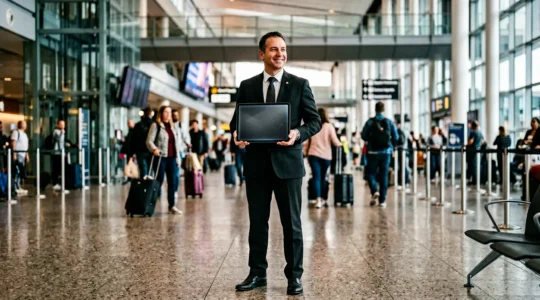
Why Is a Signboard Service Crucial for Your Non-English Speaking Clients?
Contrary to common belief, a signboard service isn’t about logistics; it’s a strategic act of non-verbal communication that defines the first impression for an international VIP. Success lies in anticipating cultural needs and eliminating communication friction before it occurs. Details…
Read more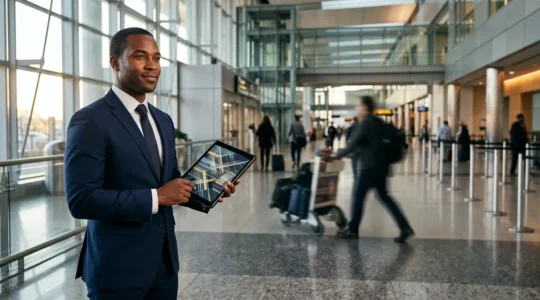
Flight Delayed? Why Your Driver’s Real-Time Tracking Method Is Critical
The reliability of your airport pickup doesn’t depend on whether your driver tracks your flight, but on the *quality* of the data they use. Standard dispatchers often rely on delayed information, while professional services use direct, millisecond-level API data feeds….
Read more
Why Choose a Chauffeur Over a Black Cab for High-Stakes London Meetings?
A professional chauffeur is a strategic asset that de-risks high-stakes meetings, while a black cab represents an unquantified but significant liability. The true cost of a 10-minute delay is not the fare, but the potential loss of reputational capital and…
Read more