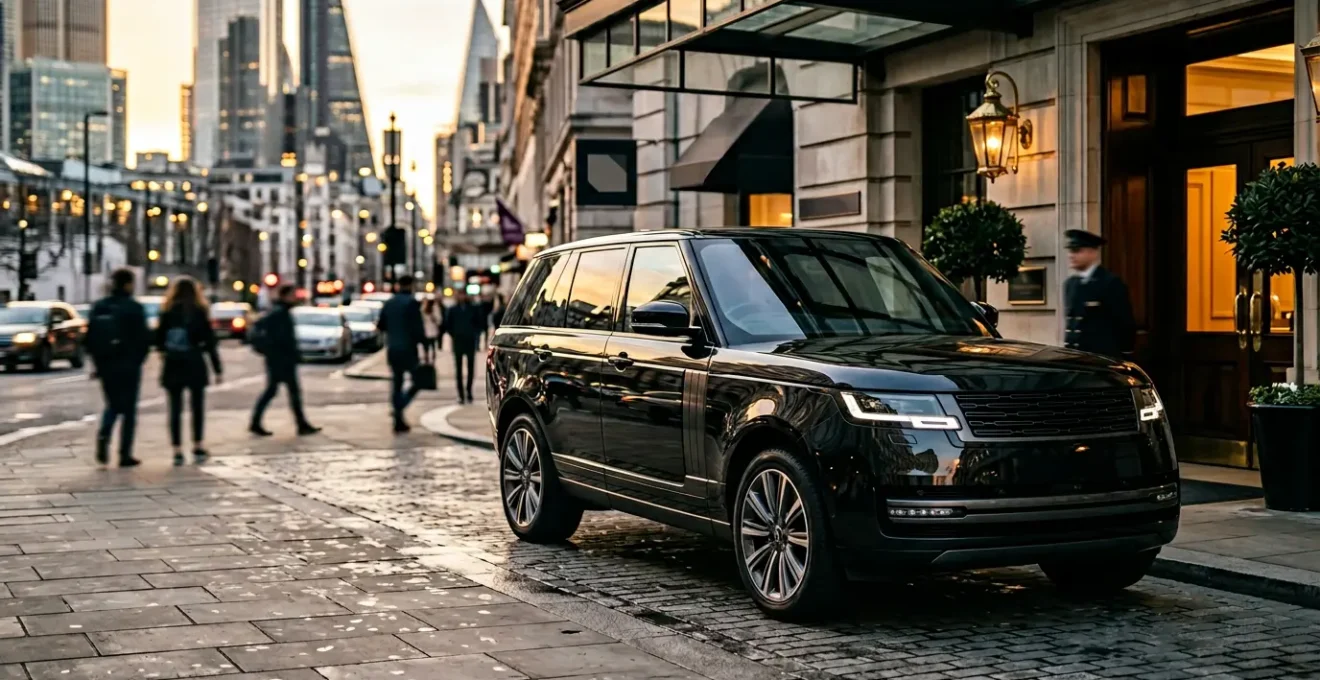
The biggest mistake in VIP transport is believing darker tint equals better security; in reality, it often increases risk by creating a high-value target.
- Legal limits and the ‘Chameleon Effect’ make blackout tints impractical and unreliable for true confidentiality.
- True discretion comes from ‘managed visibility’—blending in and controlling what is seen, not just hiding.
Recommendation: Shift your strategy from total invisibility to operational flexibility, using the right tool (tint, blinds, or smart glass) for the specific threat profile and environment.
For any agent or diplomat, the moment a high-profile client steps into the public domain is a critical point of vulnerability. The immediate operational goal is to move the principal from a secure location to the sterile environment of a vehicle with minimal exposure. The knee-jerk reaction is often to request a vehicle with the darkest possible window tint, assuming that total opacity equals total security. This approach is rooted in the logical-seeming premise that if no one can see in, the principal is safe.
However, from a professional security standpoint, this assumption is not only flawed but can be counter-productive. The pursuit of absolute invisibility often ignores legal realities, the physics of light, and the psychology of surveillance. Relying solely on “limo tint” is a one-dimensional tactic in a three-dimensional world. It overlooks more flexible and intelligent solutions that offer greater control and, ultimately, superior discretion.
The true art of high-profile transport lies not in achieving total invisibility, but in mastering managed visibility. It’s a strategic discipline focused on blending into the environment, controlling exposure, and making deliberate choices that reduce, rather than attract, attention. An overly aggressive tint can act as a beacon, signalling the presence of a person of interest and elevating the vehicle’s “Anomaly Index” in a busy urban setting.
This guide moves beyond the simplistic “darker is better” myth. We will dissect the operational realities of using tinted glass for VIP transport, from UK legal restrictions and the physical limitations of tint films to the strategic blunders that inadvertently invite paparazzi attention. We will then explore the tactical advantages of alternative technologies and the critical importance of exit-and-extraction choreography to ensure genuine confidentiality and safety.
This article provides a comprehensive operational overview, detailing the strategic considerations for ensuring client confidentiality during transport. Explore the sections below to understand the nuances of vehicle privacy, from legal compliance to advanced extraction protocols.
Summary: A Strategic Guide to VIP Transport Privacy and Security
- Why Is “Limo Tint” Illegal on Front Windows in the UK?
- How Much Can Pedestrians See Through 20% VLT Tint?
- Electric Blinds or Permanent Tint: Which Offers Better Flexibility?
- The “Too Dark” Mistake That Actually Attracts Paparazzi Attention
- How to Verify Tint Levels Before Your Car Arrives?
- Main Exit or VIP Gateway: Which Is Safer for High-Profile Clients?
- Seatbelts and Taxis: What Is the Law for Rear Passengers?
- How to Guarantee a 5-Minute Terminal-to-Car Exit for VIP Guests?
Why Is “Limo Tint” Illegal on Front Windows in the UK?
The primary reason “limo tint” is illegal on the front windows of any vehicle in the UK is driver visibility and public safety. From a security perspective, your chauffeur’s ability to perceive and react to threats is paramount. An obstructed view is a compromised defence. The law is not arbitrary; it is designed to ensure a critical standard of operational awareness for the driver, which directly impacts the principal’s safety. Any modification that hinders the driver’s field of vision, especially in low-light conditions or adverse weather, introduces an unacceptable level of risk.
Legally, the rules are explicit. In the UK, the front windscreen must allow at least 75% of light to pass through, and the front side windows (driver and front passenger) must have a minimum Visible Light Transmission (VLT) of 70%. This is according to UK legal requirements for 2025, which effectively outlaws any significant tinting forward of the B-pillar. Factory-fitted glass on modern vehicles often has a slight tint that already brings it close to these legal limits, leaving very little-to-no margin for additional films.
For a security detail, non-compliance is not an option. A vehicle with illegal tint is a magnet for police attention, leading to stops, fines, and potentially having the vehicle taken off the road. This not only compromises the immediate journey but also creates a public spectacle—the very thing you are paid to avoid. The focus for front windows should therefore be on maintaining maximum visibility for the driver, whose perception and reaction time are the first line of defence in any evasive manoeuvre.
Therefore, any privacy measures must be concentrated on the rear passenger compartment, where the regulations are far more permissive and allow for much darker tints or other solutions.
How Much Can Pedestrians See Through 20% VLT Tint?
A 20% VLT (Visible Light Transmission) tint, which allows 20% of light to pass through, is a common choice for the rear windows of executive vehicles. It offers a significant degree of privacy, but it is not a cloak of absolute invisibility. Its effectiveness is highly dependent on ambient lighting conditions, a phenomenon security professionals refer to as the “Chameleon Effect.” Understanding this is crucial for managing the principal’s exposure and avoiding false assumptions about confidentiality.
During bright daylight, a 20% tint is highly effective. An outside observer is looking from a bright environment into a dark one, and the reflective properties of the tint film make the glass appear almost opaque. A study on privacy and visibility confirms that with 20% VLT, interior details become very difficult to discern in most daytime lighting. An onlooker might perceive a shape or movement, but distinguishing features or identifying a specific individual is nearly impossible. This provides a strong layer of protection against casual observation and opportunistic paparazzi.
However, the situation inverts at night. When the vehicle’s interior is illuminated—even by something as simple as a passenger looking at a phone screen—and the exterior is dark, the dynamic shifts. The interior light source effectively backlights the principal, creating a silhouette that is clearly visible from the outside. The “Chameleon Effect” demonstrates that the same 20% tint that provided excellent privacy during the day can betray the presence and general shape of occupants at night. Privacy is conditional, not absolute.
Therefore, operational protocols must account for this. For instance, instructing a principal to avoid using bright electronic devices when stationary at night or when passing through well-lit, high-risk areas is a simple but effective countermeasure.
Electric Blinds or Permanent Tint: Which Offers Better Flexibility?
While permanent tint is a passive, “always-on” solution, its fixed nature is also its greatest weakness. In high-stakes security, flexibility is a tactical advantage. The choice between permanent tint, electric blinds, and emerging technologies like PDLC smart glass is a trade-off between speed, control, and strategic signalling. The right choice depends on the specific operational requirements and the desired level of dynamic response.
Electric blinds, often integrated into the rear doors and back window of luxury sedans, offer a level of control that tint cannot. They allow the vehicle to appear as a standard, non-descript car when privacy is not needed, helping it blend into traffic and lower its “Anomaly Index.” They can be deployed in seconds when approaching a high-risk area or coming to a stop, providing near-total opacity. This ability to switch from transparent to opaque on demand is a significant tactical advantage, allowing the security detail to manage visibility actively rather than passively.
However, a more advanced solution is PDLC (Polymer Dispersed Liquid Crystal) smart glass. As an expert from Gauzy Technologies notes, this technology offers superior performance:
PDLC switches from transparent to opaque in a matter of seconds… ideal for privacy applications where instant switching is necessary
– Gauzy Technologies, Electrochromic Glass vs. PDLC Smart Glass Technical Report
This comparison highlights the operational trade-offs. As detailed in a comparative analysis of privacy solutions, each system has distinct advantages and disadvantages.
| Feature | Permanent Tint | Electric Blinds | PDLC Smart Glass |
|---|---|---|---|
| Deployment Speed | Always active | 5-10 seconds | 1-3 seconds |
| Operational Noise | Silent | Audible motor | Silent |
| Failure Points | Film degradation only | Motor, tracks, fabric | Electrical system |
| Privacy Control | Fixed level | Full control | Instant on/off |
| Maintenance | Minimal | Regular servicing | Minimal |
| Strategic Signal | ‘Always private’ | ‘Selective moments’ | ‘Dynamic control’ |
From a security perspective, the “Strategic Signal” is a key consideration. A permanently tinted vehicle always signals “VIP inside.” A vehicle with blinds or smart glass only sends that signal when it chooses to. This control over signalling is the essence of operational flexibility.
Ultimately, for maximum flexibility and discretion, dynamic solutions like PDLC smart glass are superior, as they provide instant, silent control over the vehicle’s privacy state without the mechanical failure points of blinds.
The “Too Dark” Mistake That Actually Attracts Paparazzi Attention
One of the most significant strategic errors in VIP protection is assuming that maximum security means maximum visual obstruction. In an urban environment, a vehicle that tries too hard to be invisible often achieves the opposite effect: it becomes a conspicuous anomaly. This is the “Too Dark” mistake, where excessively tinted windows, especially on a large, imposing vehicle like a matte black SUV, act as a powerful magnet for unwanted attention.
The vehicle becomes a moving black box, screaming “someone important is in here.” This drastically increases what security analysts call the “Anomaly Index”—a measure of how much an object or person deviates from its surrounding environment. A standard luxury sedan with a legal, moderate tint can move through a city with relative anonymity. A blacked-out SUV, however, is immediately flagged by professional observers, from paparazzi to hostile surveillance teams, as a high-value target.
An analysis of VIP culture and security details highlights this paradox. It shows how overtly aggressive security measures, such as vehicles with fully blacked-out windows, actually increase public and media attention rather than deflecting it. The goal of discretion is defeated the moment the vehicle stands out. True security lies in blending in, not in creating a mobile fortress that advertises its own importance.
Effective counter-intelligence strategy involves subtlety. Instead of making the principal’s vehicle an obvious target, advanced teams might employ a “Vehicle Shell Game,” using a heavily tinted decoy vehicle to draw attention while the principal travels in a far more mundane car. The core principle is that context is key. The level of tint and type of vehicle should match the environment to minimize the Anomaly Index. The objective is to be overlooked, not to be impenetrable.
Therefore, before specifying vehicle requirements, the primary question should be “What will blend in here?” rather than “What is the darkest tint we can get?”
How to Verify Tint Levels Before Your Car Arrives?
Trusting a vehicle provider’s description is not sufficient when the principal’s security and legal compliance are at stake. Verification is a non-negotiable part of the security advance. Ensuring the window tint levels are both legal and appropriate for the mission must be done before the client ever enters the vehicle. This requires a clear and professional protocol.
The first step happens during booking. You must request a film compliance certificate or written confirmation of the VLT percentages for all windows. This establishes a paper trail and holds the provider accountable. However, written assurance must always be followed by physical verification on-site. The most reliable method is to use a portable VLT meter. This handheld device is placed on either side of the glass and gives a precise, digital reading of the light transmission percentage. It removes all guesswork and provides objective, defensible data.
During the on-site check, the inspection goes beyond just the VLT reading. You must also conduct a visual inspection of the tint film itself. Look for any signs of low-quality application, such as optical distortions, bubbling, or peeling edges. These flaws not only suggest a lack of professionalism from the provider but can also create visual impairments for the occupants and the driver, posing a direct safety risk. Inconsistent colouring across different windows can also indicate a shoddy job.
This entire process should be formalized into a pre-ride security checklist. It ensures that every vehicle, whether from a new or a trusted provider, meets the required standards every single time.
Your Action Plan: Pre-Ride Tint Verification Protocol
- Request film compliance certificate from the service provider during the booking process to establish a baseline.
- Use a portable VLT (Visible Light Transmission) meter for objective on-site verification of all windows upon vehicle arrival.
- Visually inspect for optical distortions, bubbling, or colour inconsistencies that indicate low-quality film or application.
- Incorporate tint verification as a mandatory step in the comprehensive pre-ride security advance protocol.
- Document the verified specifications in a ‘Vehicle Passport’ for the assignment to ensure consistency for repeat services.
This diligence ensures operational integrity, legal compliance, and ultimately, the client’s safety and confidentiality.
Main Exit or VIP Gateway: Which Is Safer for High-Profile Clients?
The choice of an exit route is one of the most critical tactical decisions in a protective detail. The designated “VIP Gateway” at an airport or venue may seem like the obvious, premium choice, but it is often the least secure. It is a predictable chokepoint, a known location that every photographer, journalist, and potential adversary is already monitoring. True security is found in unpredictability and control.
A dynamic exit strategy is essential. This involves rejecting the default option and assessing all possible egress points based on real-time intelligence. Professional chauffeur services working in concert with a security team will implement a “Third Option” strategy. As one case study on dynamic risk assessment demonstrates, this involves using unconventional exits like service doors, loading bays, or staff entrances. The success of this strategy hinges on a crucial detail: matching the vehicle to the exit. An armoured SUV waiting by a service exit is a major anomaly. A discreet sedan, however, can blend in perfectly, allowing for a swift, unnoticed departure.
The principle is to avoid the path of greatest expectation. The VIP Gateway is designed for convenience, not for security. It centralizes the risk. By creating multiple exit options and making a last-minute decision based on the ground situation, you retain the element of surprise. This requires meticulous advance planning, with primary, secondary, and tertiary routes pre-surveyed and a clear line of communication between the internal team and the driver. The driver isn’t just a driver; they are an active part of the security matrix, providing real-time feedback on the viability of the chosen extraction point.
Ultimately, the safest exit is the one that nobody is expecting. The sterile, predictable environment of a VIP lounge is often a prelude to the most vulnerable moment of the journey: the public transition to the vehicle.
Seatbelts and Taxis: What Is the Law for Rear Passengers?
In the United Kingdom, the law is unequivocal: if a vehicle is fitted with seatbelts, passengers are required to wear them. This applies to all seats, including those in the rear, and covers all passenger vehicles, including licensed taxis and private hire vehicles. From a security standpoint, this is not a matter of mere legal compliance; it is a critical safety imperative. The comfort of the principal never supersedes their physical security.
A common issue in executive transport is what can be termed the “Safety Paradox.” A high-profile client, seated in the plush comfort of a luxury or armoured vehicle, may feel a false sense of invincibility. This can lead to a reluctance to wear a seatbelt, viewing it as a minor inconvenience. It is the chauffeur’s and the close protection officer’s professional duty to insist on compliance. This must be handled with tact but also with unwavering firmness. The potential for sudden acceleration, braking, or evasive manoeuvres is inherent in any VIP transport scenario; an unbelted passenger becomes a projectile inside the vehicle during such an event.
As experts in vehicle preparation for security details emphasize, the chauffeur’s role extends beyond driving.
For a premium service, compliance is the baseline; excellence is ensuring client safety. The chauffeur’s role is to enforce seatbelt use as a critical safety measure, especially during potential evasive manoeuvres
– Blue Raven Intelligence, Vehicle Preparation for VIP Transportation Guide
Furthermore, high-security vehicles often feature advanced restraint systems, such as 4 or 5-point harnesses, designed for maximum protection. The refusal to use even a standard 3-point belt negates these expensive and life-saving features. In the event of an incident, demonstrating that the professional team insisted on seatbelt use is also a crucial aspect of liability and risk management. The seatbelt is the most effective piece of safety equipment in the vehicle, and its use is non-negotiable.
The conversation about seatbelts should be a standard, professional part of the pre-departure briefing with the principal, framed as an integral component of their overall security.
Key Takeaways
- Excessive tint creates a high “Anomaly Index,” turning the vehicle into a target instead of concealing it.
- ‘Managed Visibility’ is the superior strategy, adapting privacy levels to the context, threat, and environment.
- A successful extraction is ‘Choreographed Invisibility’—a blend of planning, communication, and route selection, not just speed.
How to Guarantee a 5-Minute Terminal-to-Car Exit for VIP Guests?
A rapid and seamless transition from a terminal to a waiting vehicle is not a matter of luck or rushing; it is the result of a meticulously planned and rehearsed process. The goal is to achieve what specialist teams call “Choreographed Invisibility.” The entire extraction should be so fluid and efficient that it is barely noticeable to onlookers. This level of performance is guaranteed by a system, not by improvisation.
Elite VIP transport services, often staffed by former law enforcement or military personnel, implement a multi-pillar system for extractions. A prime example is a four-pillar approach: First, Pre-Arrival Coordination, where encrypted communications are established between the airport-side team and the waiting chauffeur to synchronize every move. Second, the creation of a “Security Bubble,” a moving sterile zone formed by close protection officers who escort the principal from the moment of contact. Third, Precision Vehicle Staging, where the vehicle is positioned at an exact, pre-planned stopping point with the correct orientation for immediate departure. The rear door should open directly in line with the principal’s path.
The fourth and final pillar is the use of Pre-Planned Primary and Alternate Departure Routes. The moment the principal is in the car, the chauffeur is already moving, following a route chosen to minimize stops and potential chokepoints. The entire sequence, from the first handshake to the car pulling away, is a single, continuous motion. It’s a performance where every member of the team knows their role, their cues, and their contingencies. This is not about speed for speed’s sake; it’s about efficiency that eliminates opportunities for interception or observation.
Frequently Asked Questions on High-Security Transport
Do high-security vehicles have special seatbelt equipment?
Yes, many high-security vehicles go beyond standard seatbelts to include 4 or 5-point harnesses for enhanced protection during evasive manoeuvres.
What is the ‘Safety Paradox’ in luxury vehicles?
High-profile clients in armoured or luxury vehicles often feel a false sense of invincibility and may neglect seatbelt use, requiring chauffeurs to professionally insist on compliance.
What are the liability implications for service providers?
In case of an incident, demonstrating that the chauffeur insisted on seatbelt use is critical for professional conduct documentation and risk management.
The next step is to integrate these principles of choreographed movement and managed visibility into a comprehensive security advance protocol for every client journey, ensuring safety through planning, not just reaction.